
Integrating Art into Traditional Talk Therapy
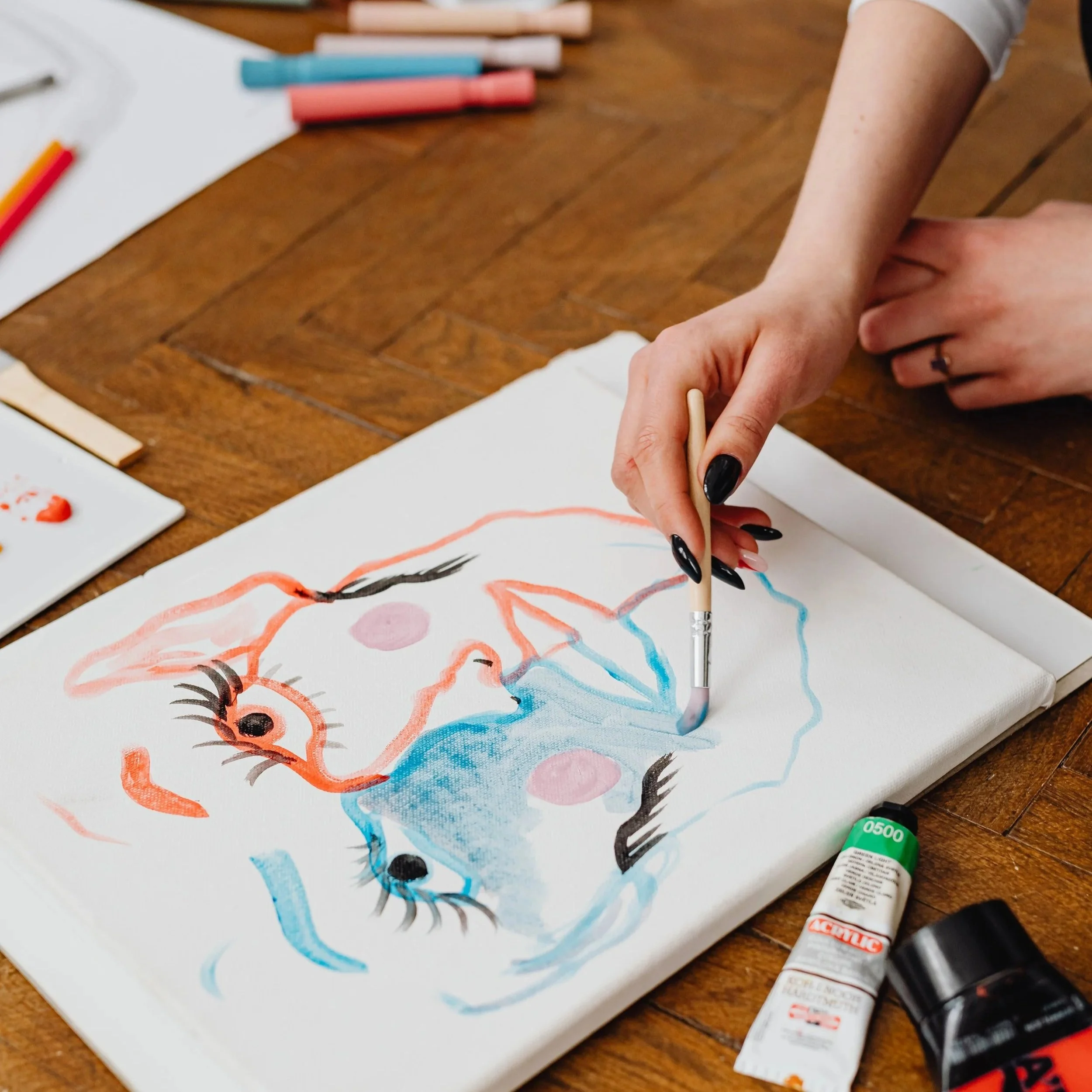
Most people who have been to therapy are familiar with the basic structure: two people in a room, one talking and one listening, working together toward greater understanding and change. Talk therapy has a long and well-documented history of effectiveness. When it works well, it is genuinely transformative. But anyone who has sat in a therapy session and felt stuck, unable to find the right words for something they deeply need to express, understands intuitively that language sometimes reaches its limit.
This is not a sign that therapy is failing. It is an invitation to expand the therapeutic toolkit.
Integrating art into traditional talk therapy does not mean replacing the conversation or turning sessions into craft time. It means recognizing that human beings process and communicate through multiple channels: image, sensation, movement, sound, and story, and that accessing those channels alongside verbal dialogue can unlock dimensions of healing that words alone may not reach. For many clients, adding a creative element to their therapeutic work shifts something that had been stuck for a long time.
Why the Brain Sometimes Needs More Than Words
To understand why integrating art and talk therapy can be so powerful, it helps to understand a little about how the brain stores and processes difficult experiences.
Verbal, analytical processing primarily happens in the prefrontal cortex and left hemisphere, the parts of the brain associated with logic, language, and sequential thinking. But emotional memories, particularly traumatic ones, are stored in more primitive areas of the brain, including the amygdala and limbic system, which do not operate in language. When someone experiences trauma, intense grief, or overwhelming anxiety, the memory of that experience is often encoded somatically and visually rather than as a coherent narrative.
This is why a person can talk about a difficult experience for months without feeling like anything has shifted, while a single art-making session can suddenly unlock an emotional release or insight that verbal processing had not reached. The image, the color, the texture, or the symbolic content created in an art-making exercise communicates directly with the parts of the brain where the emotional material actually lives.
EMDR therapy operates on a similar principle, engaging bilateral stimulation to access and reprocess traumatic memories that are not easily reached through conversation alone. Art integration works in a complementary way, creating a bridge between the nonverbal emotional experience and the verbal processing that gives it meaning and context.
What Art Integration Actually Looks Like in Therapy Sessions
It is worth being specific about what integrating creative expression into therapy looks like in practice, because the reality is more varied and less intimidating than people often imagine.
In an integrated session, a therapist might invite a client to draw or collage their current emotional landscape before beginning a verbal discussion. This can help both the client and the therapist understand what is happening internally with greater nuance than words sometimes allow. A client who describes feeling "stressed" might draw something that reveals layers of grief, fear, and longing that the word "stress" does not begin to capture.
Other integrative approaches include:
Asking a client to create an image of how a situation feels versus how they wish it felt
Using clay or collage to externalize an internal conflict and then examine it from the outside
Creating a visual timeline of significant life events to identify patterns and turning points
Inviting clients to draw or paint during a session as a way of staying present with difficult material, rather than intellectualizing away from it
Using imagery and symbol to work with dreams, recurring fears, or experiences that resist direct discussion
Importantly, the therapist in an integrated approach is not functioning as an art teacher. The quality of the artwork is irrelevant. The therapist is tracking the emotional and relational process that unfolds through the creative work and using what emerges to deepen the therapeutic dialogue.
The benefits clients commonly describe from integrated approaches:
Greater access to emotional material that has felt locked or unavailable
A sense of relief from externalizing internal experiences into something visible
Reduced self-consciousness about expressing difficult or "irrational" feelings
Increased engagement with the therapy process itself
New insights and perspectives that emerged through image rather than analysis
A sense of ownership and agency over their own healing process
Who Benefits Most from Creative Integration in Therapy
While integrating art into talk therapy can enhance the therapeutic experience for a broad range of people, there are specific populations and presentations where the benefits tend to be especially pronounced.
Trauma survivors often find that purely verbal approaches keep them at a distance from the material they need to process, or alternatively, that verbal discussion moves them into a distress response that feels overwhelming and uncontrolled. Art-making can provide a titrated, manageable way to approach traumatic content, allowing clients to stay within a window of tolerance that makes real processing possible. This is one reason art therapy has become an important part of trauma recovery work for many clinicians.
People working through grief frequently encounter experiences that feel beyond language. The loss of a person, a relationship, a version of life they had imagined, these are experiences that benefit from being expressed in forms beyond words. Art provides a space where grief can exist in its full complexity without needing to be explained or justified.
Individuals dealing with anxiety often find that their verbal, analytical minds are their greatest source of suffering. The rumination, catastrophizing, and over-thinking that characterize anxiety can be temporarily interrupted by the grounding, sensory, present-moment nature of art-making. Many clients describe the shift from verbal processing to creative engagement as a genuine relief from the tyranny of anxious thought.
Clients who find traditional talk therapy overly intellectual or disconnected from their felt experience often discover that creative integration makes therapy feel more alive, more real, and more relevant to their actual inner world.
How Therapists Are Trained to Combine These Approaches
Integrating art into talk therapy is not something any therapist can do effectively without training. Understanding how to use creative modalities therapeutically, how to track what emerges in the artwork, how to facilitate the conversation that follows, and how to avoid projecting meaning onto a client's creative work requires specific knowledge and supervised experience.
Board Certified Art Therapists (ATR-BC) have completed graduate-level training specifically in the integration of art and psychotherapy. Licensed therapists who incorporate expressive arts into their practice alongside more traditional approaches bring additional training in those specific modalities. At South Hills Counseling, therapists like Jennie August and Angie Conrad bring both formal art therapy credentials and deep clinical experience to their integrated work.
When you are exploring whether an integrated approach might be right for you, it is worth asking a prospective therapist directly about their training in creative and expressive modalities and how they typically incorporate these approaches into their work.
Integrating Approaches: A Practical Guide to Getting Started
If you are currently in therapy and interested in incorporating more creative elements, or considering starting therapy and curious whether an integrated approach might be a better fit for you, here are practical steps to consider:
1. Reflect on Where You Have Felt Stuck
Think about moments in therapy or in your own self-reflection where you have felt unable to access or express something important. These stuck points often indicate exactly where a creative approach might open new doors.
2. Tell Your Therapist What You Are Noticing
If you are already working with a therapist, bring this conversation directly to them. A skilled clinician will welcome your input and can explore whether integrating creative elements might serve your specific goals.
3. Start Small and Notice What Happens
You do not have to commit to a full art therapy experience to begin exploring this territory. Even journaling with images, doodling while processing a difficult topic, or spending time with expressive movement can begin to open new channels of self-awareness.
4. Look for Therapists with Integrative Training
If you are starting fresh, search specifically for therapists who describe their approach as integrative, expressive, or who list art therapy or creative modalities among their skills. Our therapist profiles include detailed information about each clinician's training, approaches, and specialties.
5. Be Patient with the Process
Integration of different therapeutic modalities takes time to feel natural. Initial sessions might feel a little unusual or uncomfortable before they feel genuinely useful. This is normal. The therapeutic relationship and the trust it builds over time are what make any modality effective.
6. Consider What Your Body Already Knows
Sometimes the clearest signal that a nonverbal approach would be beneficial comes from your own body. If you notice tension, fatigue, or emotional disconnection when you try to talk through something, those physical signals may be pointing toward a different kind of engagement.
These steps can help you move toward a therapeutic experience that draws on the full range of your expressive and cognitive capacities.
The Art Therapy Difference at South Hills Counseling
At South Hills Counseling and Wellness, we believe that people are more than the stories they can tell about themselves. The full human experience includes sensation, image, emotion, and creativity alongside language and logic. Our approach to therapy reflects that belief.
Whether you are drawn to art therapy as a primary modality or interested in how creative integration might enrich a more traditional therapeutic experience, our team is equipped to meet you where you are. Sessions take place in a private, welcoming environment at our Pleasant Hills, Bethel Park, or Upper St. Clair offices, all of which offer a comfortable space for the kind of deep, meaningful work that creative integration makes possible.
If you are curious about what an integrated approach could look like for you, we invite you to reach out. The most important step is simply beginning.