
Children feel things deeply. They experience joy, fear, grief, confusion, and everything in between with an intensity that often surprises the adults around them. But here is the challenge: the emotional vocabulary and cognitive development needed to articulate those feelings are still being built. When a child cannot find the words to explain why they feel the way they do, those emotions can show up in other ways, such as behavioral outbursts, withdrawal, physical complaints, or difficulty at school. Art therapy offers a different kind of door into those inner experiences, one that does not require perfect language or full emotional understanding to step through.
At South Hills Counseling and Wellness, we work with children who are navigating some of life's hardest chapters. Art therapy is one of the most effective and accessible tools we offer for younger clients because it meets children exactly where they are developmentally, emotionally, and individually.
Why Children Struggle to Express Emotions Verbally
Before understanding what art therapy can do for a child, it helps to understand why verbal expression alone so often falls short for young people.
The prefrontal cortex, the part of the brain responsible for language, abstract thinking, and emotional regulation, is not fully developed until a person's mid-twenties. For children ages 4 through 12, this means that even when they want to communicate their inner experience, they simply may not have the neurological tools to do it clearly with words. A child who witnessed something frightening may not be able to say "I feel anxious and unsafe." But they can draw a picture of a thundercloud over a house, and that image can open a meaningful therapeutic conversation.
Trauma, in particular, tends to be stored in parts of the brain that are not easily accessed through verbal recall. Research consistently shows that creative, sensory-based approaches can help process experiences that are difficult to verbalize. This is one of the core reasons art therapy is considered an evidence-informed approach for children who have experienced adverse events.
Additional reasons children benefit from nonverbal therapeutic approaches:
Young children often do not yet understand that their feelings are separate from their identity
Shame and self-consciousness can make direct verbal disclosure feel threatening
Children with language delays, autism spectrum profiles, or ADHD may find verbal processing even more challenging
Play and creative activity are children's natural languages; therapy that speaks that language feels less like a clinical appointment and more like a safe space
Artistic expression gives children a sense of control and agency during times when they may feel powerless
What Art Therapy Actually Looks Like with Children
Many parents hear "art therapy" and picture a quiet room where a child colors in a coloring book while a therapist watches. The reality is far more dynamic, relational, and intentional than that.
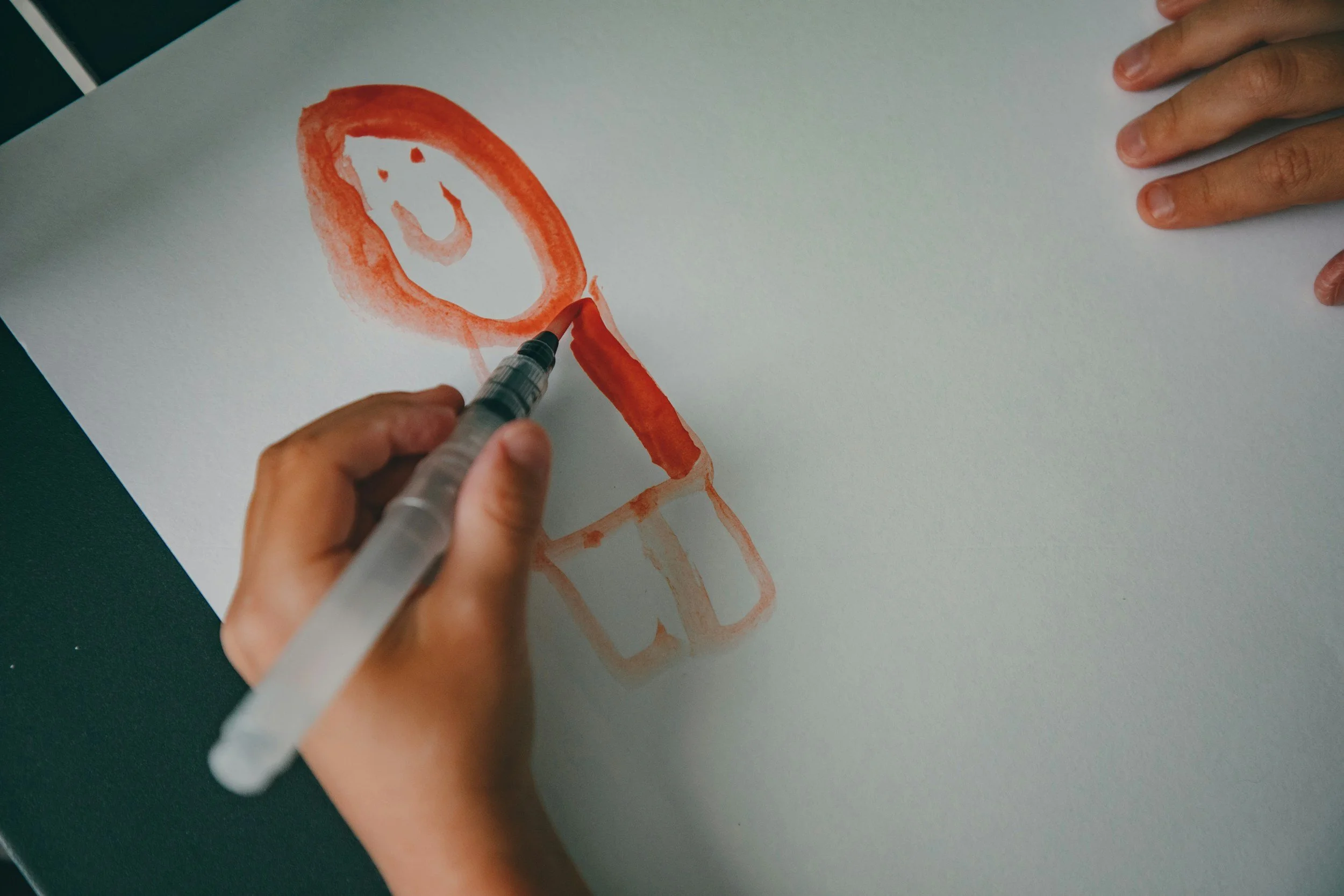
Art therapy for children is facilitated by a trained therapist who understands both child development and therapeutic process. The therapist does not simply observe, they engage, follow the child's lead, reflect themes they notice in the work, and create a safe enough relationship that the child feels free to explore difficult emotional territory through the creative process. Sessions might involve drawing, painting, clay, collage, mixed media, or sand tray work, depending on the child's age, needs, and comfort level.
The goal is never to produce beautiful artwork. The goal is to support expression, processing, and growth. Whether a child scribbles furiously in black and red while working through anger, or slowly and carefully constructs a scene that reflects their family situation, the therapist is tracking the emotional process beneath the creative product.
Our team at South Hills Counseling includes therapists like Jennie August, a Board Certified Art Therapist and Licensed Professional Counselor who specializes in working with children and adolescents ages 3 through 18. Her approach incorporates art therapy, child-centered play therapy, and expressive arts techniques to create space for children to build confidence, develop coping skills, and process experiences that are difficult to talk about directly.
When Art Therapy Can Help Children Most
Art therapy is not only for children in crisis. It is a versatile therapeutic approach that can support a wide range of emotional, developmental, and relational needs. That said, there are certain situations where it tends to be especially effective.
Children who have experienced trauma benefit enormously from approaches that engage the body and senses rather than relying solely on narrative memory. Whether the trauma is a single event or an ongoing situation, art therapy creates a way to process the experience at a pace the child controls.
Children navigating family changes, such as divorce, the arrival of a sibling, a parent's illness, or a move, often carry emotional weight they don't know how to communicate. Art therapy gives them a way to externalize that weight and begin to make sense of it.
Children who present with anxiety, depression, or behavioral challenges in school or at home sometimes struggle to connect their behaviors to their inner emotional state. The art-making process can help them see that connection more clearly and develop greater self-awareness over time.
Here are some of the specific situations where families in Pittsburgh's South Hills area have found art therapy to be especially helpful for their children:
Processing grief or loss, including the death of a loved one or pet
Adjusting to a parent's divorce or remarriage
Recovering from abuse or neglect
Managing anxiety related to school performance or social situations
Building self-esteem and a stronger sense of identity
Developing communication skills and emotional vocabulary
Processing a diagnosis such as ADHD, autism, or a learning disability
Navigating bullying or peer relationship challenges
How to Know If Your Child Might Benefit
As a parent, you do not need to wait for a crisis to reach out. If something feels off with your child, that instinct is worth exploring. There are clear signs that a child may benefit from the support of a therapist, and many families find that starting therapy early makes an enormous difference in outcomes.
Here are five signs it may be time to consider art therapy or another form of child therapy for your child:
1. Significant Behavioral Changes
When a typically easygoing child becomes irritable, defiant, or withdrawn, that shift often signals something deeper is going on emotionally. Behavioral changes are one of the primary ways children communicate distress they cannot name.
2. Somatic Complaints Without a Medical Cause
Stomachaches before school, frequent headaches, and complaints of not feeling well that do not have a clear physical explanation are classic ways anxiety and emotional distress manifest in children's bodies. If your pediatrician has ruled out medical causes, emotional support may be the next step.
3. Regression to Earlier Behaviors
Bed-wetting in a child who was previously dry, thumb-sucking, baby talk, or clinginess that seems out of step with the child's age can all indicate emotional overwhelm. Regression is the nervous system's way of seeking comfort and safety.
4. Difficulty at School
Sudden drops in academic performance, trouble concentrating, avoidance of school, or reports of conflicts with peers or teachers often have emotional roots. A therapist can work with you and your child's school to understand what is driving the difficulty.
5. Expressing Hopelessness or Themes of Harm
If a child uses art, play, or direct words to express themes of hopelessness, wanting to disappear, or harming themselves or others, professional support should be sought right away. A trained therapist can assess what is happening and provide appropriate intervention.
These signs do not mean your child is broken or that you have done something wrong. They mean your child is carrying something heavy and needs a skilled, caring adult to help them set some of it down.
What Parents Can Expect from the Art Therapy Process
Starting therapy with your child can feel like a big step, and it is natural to wonder what the process will look like and how long it will take. Every child is different, and the pace of therapy reflects that individual variation.
In early sessions, the therapist focuses primarily on building a trusting relationship with the child. Children will not open up, even through creative expression, until they feel genuinely safe with the person they are with. This relationship-building phase is not a delay in the real work; it is the foundation that makes all other work possible.
As the therapeutic relationship develops, themes and patterns begin to emerge through the child's creative work. The therapist uses these themes to gently explore emotional content, introduce coping strategies, and support the development of self-regulation skills. Parents are often invited into parts of the process, particularly when the goal involves strengthening communication and connection within the family system.
Progress in art therapy does not always look linear. A child may seem to take steps backward before moving forward, particularly when working through painful material. This is a normal part of the healing process, not a sign that therapy is not working. Therapists at South Hills Counseling communicate regularly with parents to ensure families feel informed and supported throughout the process.
If you are wondering whether art therapy or individual therapy might be the right fit for your child, our team is happy to help you think through the options. The most important step is simply making the call.
Building a Bridge to Lifelong Emotional Health
Children who learn to identify, express, and regulate their emotions in healthy ways carry those skills into adolescence and adulthood. The work done in art therapy is not just about solving today's problem; it is about building the internal tools and the self-awareness that will serve a person across their entire life.
When a child learns that their feelings are not too big to be held, that they have language for their inner world, even when that language is a drawing or a lump of clay, they gain something invaluable: the confidence that they can navigate emotional difficulty without being destroyed by it. That is exactly the kind of growth we are committed to supporting at South Hills Counseling.
If you are in the Pittsburgh South Hills area and wondering whether art therapy might be right for your child, we encourage you to reach out to our team. We are here to help your family find the pathway forward.